Structural eradication of fleas and ticks targets the 95% of the parasitic population residing off the pet, concentrated as microscopic eggs, larvae, and pupae within floor crevices and upholstered fibers. In older…
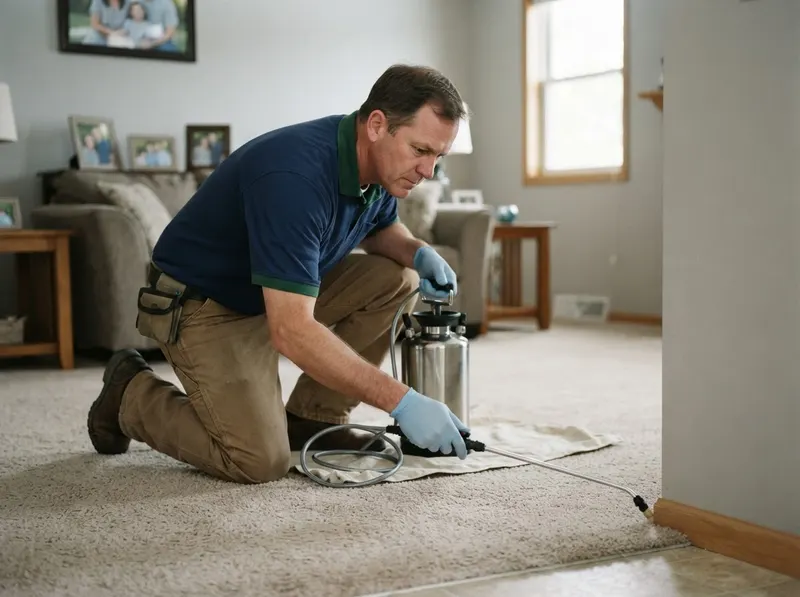
Structural eradication of fleas and ticks targets the 95% of the parasitic population residing off the pet, concentrated as microscopic eggs, larvae, and pupae within floor crevices and upholstered fibers. In older properties throughout the West Bluff, Moss-Bradley, and East Bluff neighborhoods, shifting hardwood planks and thick quarter-round moldings create sheltered microclimates where flea larvae feed on organic debris. Standard retail aerosol foggers release airborne droplets that settle entirely on horizontal surfaces, failing to penetrate these structural gaps while leaving oily residues on kitchen counters and bedding. Professional eradication uses localized structural injections of an Insect Growth Regulator (pyriproxyfen) combined with targeted botanicals. This interrupts the chitin synthesis process, ensuring that dormant pupae cannot mature into biting adults, providing immediate relief without saturated chemical odors.
Outdoor tick migration requires an adjusted structural boundary. In heavily wooded subdivisions such as Lake of the Woods, Charter Oak, and properties along Grand View Drive, proximity to deer trails and oak canopies exposes foundations to the blacklegged tick (Ixodes scapularis) and the American dog tick (Dermacentor variabilis). Ticks quest on tall turfgrass and cling to exterior siding up to 3 feet above ground level, eventually breaching weep holes and basement window frames. Structural eradication establishes a 3-foot vertical barrier on the masonry foundation and treats the transition zones where manicured lawn meets brush. In landscaped communities like The Knolls and Northmoor Hills, this perimeter protection shields finished basements and ground-floor rooms from re-infestation after outdoor maintenance or pet recreation.
Homeowners selecting structural remediation avoid the continuous financial commitment of monthly recurring subscription traps. The mechanical breakdown involves three sequenced phases: first, an intensive vacuum sweep lifts carpet fibers and stimulates pupal emergence; second, a targeted liquid microcap application treats baseboards, rug pads, and subfloor junctures; third, an exterior moisture-barrier treatment secures shaded crawl space vents and entry thresholds. Occupants and domestic animals must vacate the structure for 3 to 4 hours while the water-based treatment dries completely, after which surfaces remain dry, odorless, and safe for bare paws and hands.
Every job gets a firm, written price after a free on-site visit.
Tell us about your flea and tick structural eradication job in Peoria and we'll send a clear, written quote, usually the same day.
 ProCare Pest Solutions