When social wasps colonize residential structures, they exploit thermal air currents rising along residential siding and rooflines. In neighborhoods like West Bluff and Moss-Bradley, Victorian roof pitches, open rafter…
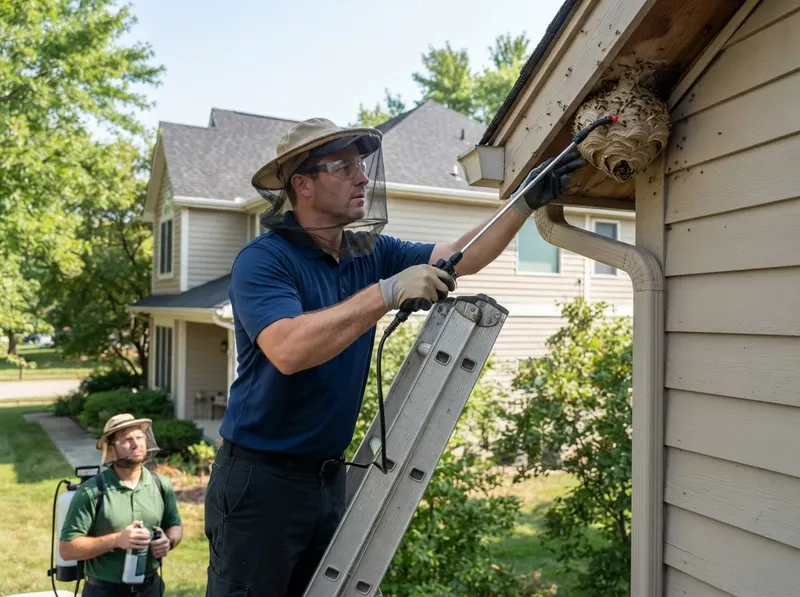
When social wasps colonize residential structures, they exploit thermal air currents rising along residential siding and rooflines. In neighborhoods like West Bluff and Moss-Bradley, Victorian roof pitches, open rafter tails, and deep wood soffits present sheltered cavities where umbrella paper wasps construct exposed hexagon combs and aerial hornets fabricate fibrous cellulose canopies up to 14 inches wide. In Charter Oak and Northmoor Hills, subterranean yellowjackets construct nested galleries beneath concrete patios, timber landscape ties, and abandoned rodent burrows. Store-bought retail sprays discharge petroleum carriers that frequently agitate the colony, prompting defensive swarming within a 15-foot radius before reaching the central brood chamber. ProCare Pest Solutions utilizes directional micro-aerosols and non-repellent insect growth regulators that settle directly into internal comb chambers, terminating the reproductive queen and nurse workers without airborne volatile drift indoors.
Stinging insect management requires distinguishing open external nests from concealed structural intrusions. If yellowjackets track along weep screeds or siding trim near Lake of the Woods or The Knolls, workers have established a cavity inside attic insulation, drywall voids, or window frames. Exterior spray treatments that seal the external opening prematurely force disoriented workers inward through unsealed baseboards, recessed lighting fixtures, or HVAC returns into living rooms. The service path prioritizes structural stabilization: locating cavity boundaries with surface temperature detection, injecting specialized dusts through micro-ports directly into the void, vacuuming clustered foragers with HEPA-sealed extraction equipment, and removing the structural nest mass when physically accessible. Once the colony collapses, technicians install 1/8-inch galvanized hardware mesh or silicone-based sealant over localized exterior masonry gaps to permanently eliminate recurring ingress routes.
Every job gets a firm, written price after a free on-site visit.
Tell us about your stinging insect and nest removal job in Peoria and we'll send a clear, written quote, usually the same day.
 ProCare Pest Solutions